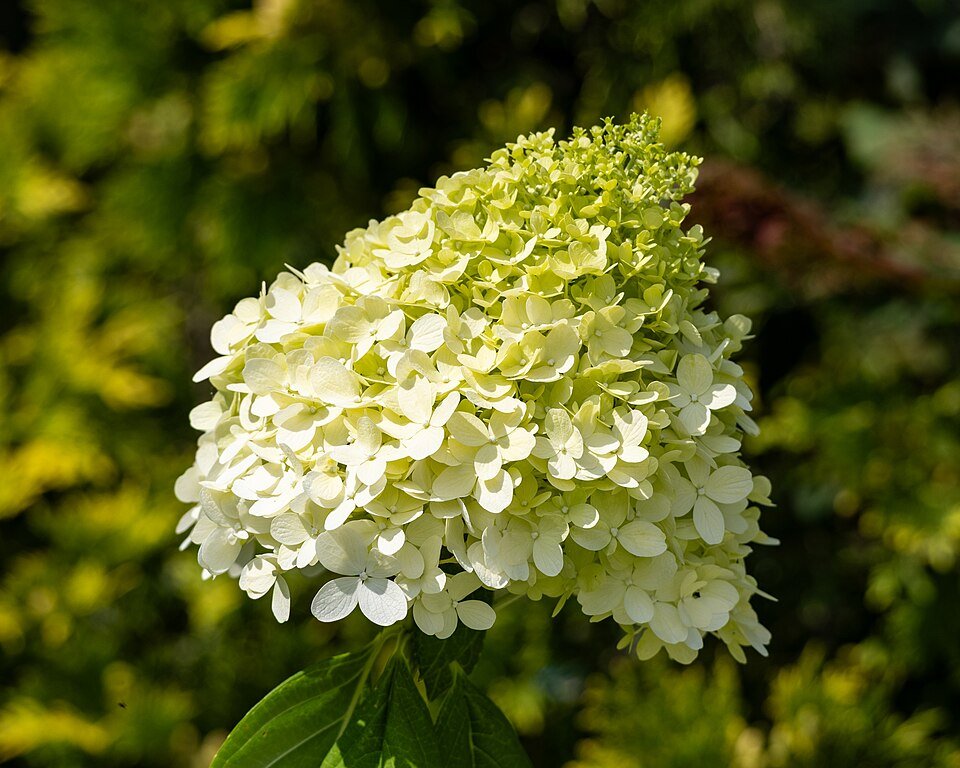
Compare at a glance
The 3 plants we cover in depth, side by side. Tap a name for the full guide, with a calendar for your zone and a printable care card.
| Plant | Zones | Size | Sun | Blooms on | Prune |
|---|---|---|---|---|---|
| Limelight Hydrangea | USDA 3 to 8 | 6 to 8 ft tall and wide | Full sun to part shade | New wood | Late winter or early spring |
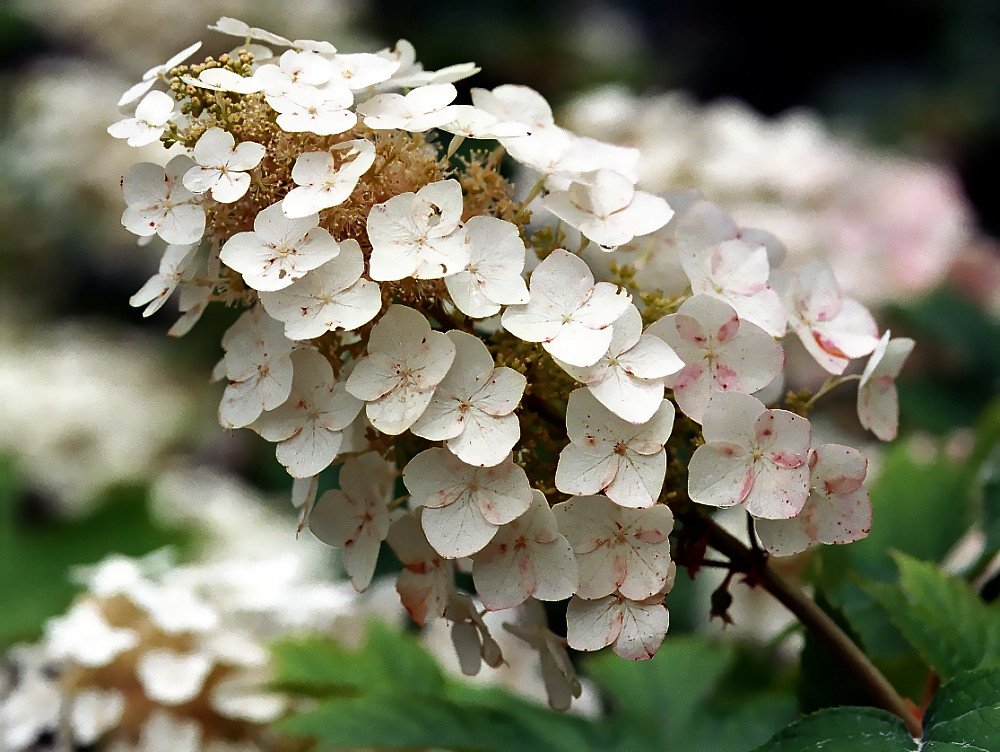
| Oakleaf Hydrangea | USDA 5 to 9 | 4 to 8 ft tall and wide | Part shade to full sun | Old wood | Right after flowering |
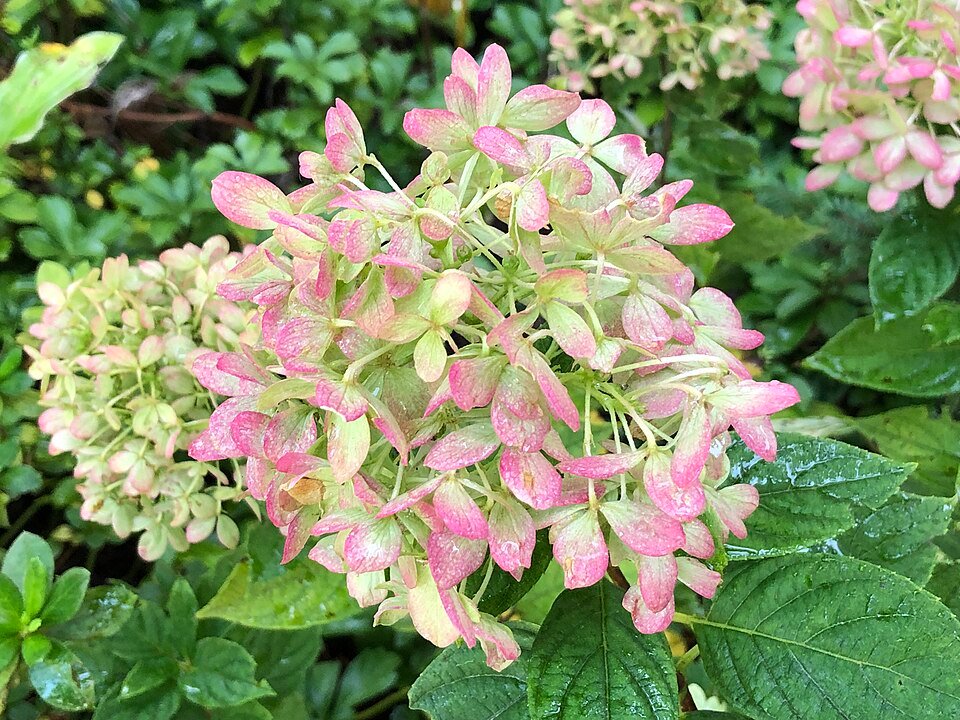
| Little Lime Hydrangea | USDA 3 to 8 | 3 to 5 ft tall and wide | Full sun to part shade | New wood | Late winter or early spring |
The 4 main types of hydrangea
Almost every hydrangea sold in the US belongs to one of four groups. Look at the plant tag for the botanical name, or compare the leaves and flower shape.
- Panicle (H. paniculata)Cone-shaped flowers, white or lime turning pink. The hardiest (zone 3) and the most sun-tolerant. Blooms on new wood. Limelight and Little Lime belong here.
- Oakleaf (H. quercifolia)Leaves shaped like oak leaves that turn red in fall. Native to the Southeast. Blooms on old wood.
- Bigleaf (H. macrophylla)The classic mophead or lacecap. Blue or pink depending on soil. Most bloom on old wood, so pruning at the wrong time removes the flowers.
- Smooth (H. arborescens)Round white heads, such as Annabelle. Native and very hardy. Blooms on new wood.
When to prune: old wood or new wood
This is the one rule that matters. Hydrangeas that bloom on new wood (panicle and smooth) form flower buds on this year's stems, so you can prune them in late winter or early spring without losing flowers.
Hydrangeas that bloom on old wood (oakleaf and most bigleaf) set next year's buds in late summer. Prune them only right after they flower, and only lightly. If you cut them in fall or spring, you cut off the flowers. When in doubt, simply remove dead stems and leave the rest.
Can you change hydrangea color?
Only bigleaf and mountain hydrangeas change color with soil. In acidic soil, with a pH below about 6, they turn blue; in neutral to alkaline soil they turn pink. A soil test from your county extension office tells you where you start.
Panicle hydrangeas such as Limelight turn pink as they age whatever the soil, and white hydrangeas stay white.
Sun, soil and water
Panicle hydrangeas take full sun in the North and appreciate afternoon shade in hot climates. Oakleaf and bigleaf types prefer morning sun and afternoon shade. All like moist, well-drained soil and a 2 to 3 inch layer of mulch.
Water deeply about once a week in dry weather, more often in the first summer and in pots. Leaves that droop in the afternoon heat but recover by evening are normal; leaves that are limp in the morning need water.
Which hydrangea for which garden
For cold winters (zones 3 and 4) choose a panicle or smooth hydrangea. For a small yard or a big pot, choose a compact panicle such as Little Lime. For a shady, natural garden in the South, choose oakleaf. Compare the three we cover in detail below.
Our hydrangeas guides
Each guide has quick facts, a planting calendar for your USDA zone, a "right for my garden?" check, problems and fixes, and a care card to print.
Coming soon in this guide
- Panicle hydrangea varieties compared
- Hydrangea tree (standard) care
- When to prune hydrangeas, month by month
Frequently asked questions
When should I prune my hydrangea?
It depends on the type. Panicle and smooth hydrangeas bloom on new wood: prune in late winter or early spring. Oakleaf and most bigleaf hydrangeas bloom on old wood: prune lightly right after flowering, never in fall or spring.
Why is my hydrangea not blooming?
The most common causes are pruning at the wrong time, flower buds killed by a late frost on old-wood types, or too much shade.
Which hydrangea is the most cold-hardy?
Panicle hydrangeas such as Limelight and Little Lime, and smooth hydrangeas such as Annabelle, are hardy to USDA zone 3.
Can hydrangeas grow in pots?
Yes. Compact varieties such as Little Lime do well in a pot at least 18 to 24 inches wide. Potted plants need more frequent watering.