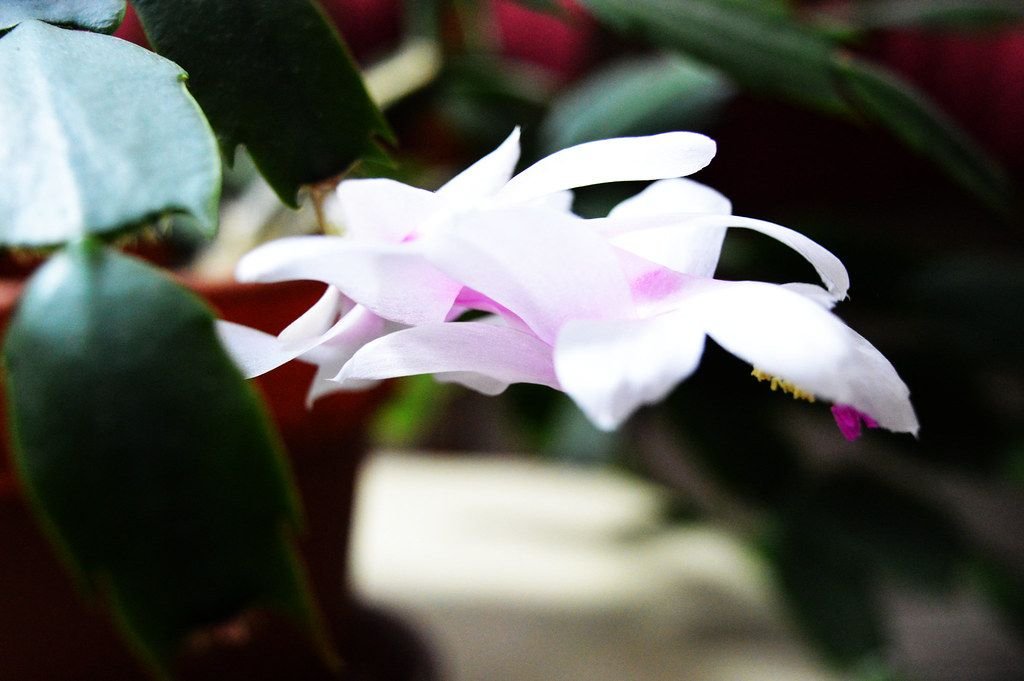
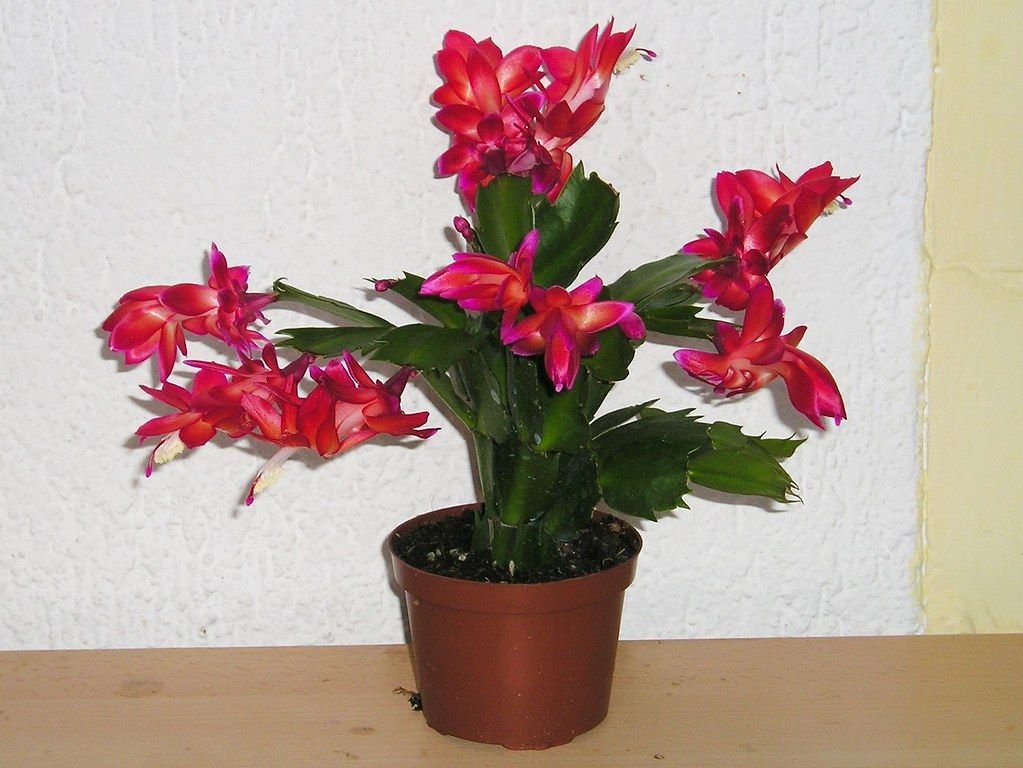
Christmas, Thanksgiving or Easter cactus?
Three look-alike "holiday cacti" are sold in fall. Look at the edges of the flat stem segments to tell them apart:
| Plant | Segment edges | Usual bloom |
|---|---|---|
| Thanksgiving cactus (Schlumbergera truncata) | Pointed, claw-like teeth | Mid-November to December |
| Christmas cactus (Schlumbergera x buckleyi) | Rounded, scalloped | December to January |
| Easter cactus (Hatiora gaertneri) | Rounded, with bristles at the tips | Spring |
Most plants sold as "Christmas cactus" are really Thanksgiving cacti. Care is the same for both.
Christmas cactus care
- Light: bright, indirect light, such as an east window. Strong afternoon sun turns the stems red or yellow.
- Water: water when the top inch of soil is dry, then let the pot drain. It is a jungle cactus from Brazilian rainforests, so it wants more water than a desert cactus, but soggy soil rots the roots.
- Soil and pot: a fast-draining mix, such as potting soil with a third perlite or orchid bark. It likes to be a little pot-bound; repot every 3 years in spring.
- Temperature: 60 to 70°F by day. Keep it away from heat vents and cold drafts.
- Humidity: a pebble tray helps in dry winter rooms.
- Feeding: a half-strength houseplant fertilizer once a month from spring to late summer. Stop in fall.
How to make a Christmas cactus bloom
Holiday cacti set buds when nights get long and cool. Starting in late September or early October:
- Give it 12 to 14 hours of uninterrupted darkness every night for about 6 weeks. A spare room with no lamps on works, or cover it with a box from early evening to morning.
- Keep nights cool, 50 to 60°F if you can. Cool nights alone can trigger buds.
- Water a little less, just enough that the stems don't shrivel.
- Once buds show, move it where you want it and then leave it in place. Normal room light is fine from now on.
How to propagate a Christmas cactus
Holiday cacti root easily, and a cutting from an old family plant makes a lovely gift. Late spring is the best time.
- Twist off a piece with 2 or 3 segments at a joint.
- Let it dry for a day or two so the cut end seals.
- Push the bottom segment about 1 inch deep into damp potting mix. Several cuttings in one pot make a full plant faster.
- Keep in bright, indirect light and barely moist. Roots form in 3 to 6 weeks; new segments mean it has rooted.
You can also root cuttings in a glass of water, then pot them up once roots are an inch long.
Common problems
| What you see | Likely cause and fix |
|---|---|
| Limp, wrinkled segments | Too dry, or roots rotted from too much water. Check the roots: firm and white means water more; brown and mushy means repot into fresh mix and water less. |
| Red or purple stems | Too much sun or cold. Move it out of direct afternoon sun. |
| No flowers | Too much light at night or nights too warm in fall. Follow the 6-week dark routine above. |
| Segments dropping | Overwatering or a sudden temperature change. |
Is a Christmas cactus safe for cats and dogs?
More houseplant guides
Frequently asked questions
How often should I water a Christmas cactus?
When the top inch of soil is dry, usually every 1 to 2 weeks. Water less in fall to help it bloom, and never let it sit in water.
How do I get my Christmas cactus to bloom again?
From early October, give it 12 to 14 hours of darkness each night and cool nights (50 to 60°F) for about 6 weeks. Buds follow.
Is it a Christmas or Thanksgiving cactus?
Look at the stem segments. Pointed, claw-like edges mean Thanksgiving cactus; rounded, scalloped edges mean Christmas cactus.
How long do Christmas cacti live?
Many decades. Plants passed down for 50 years or more are common.
Is Christmas cactus poisonous to cats?
No. The ASPCA lists it as non-toxic to cats and dogs.