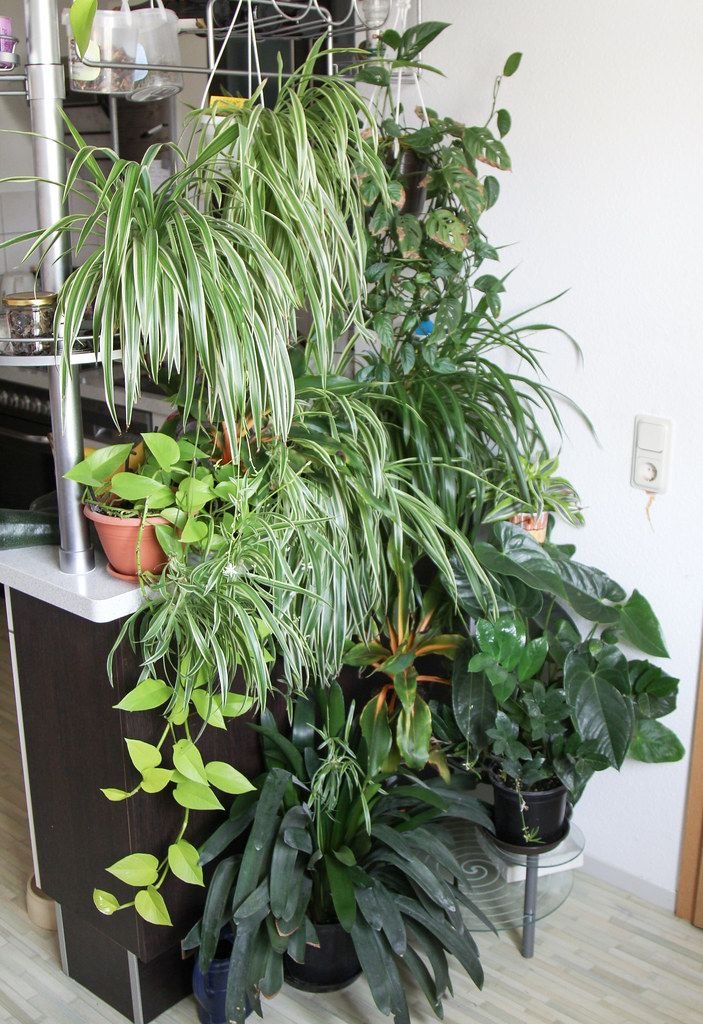
Spider plant care
- Light: bright, indirect light gives the best stripes and the most babies. It survives in low light but grows slowly. Direct afternoon sun scorches the leaves.
- Water: water when the top inch of soil is dry, then let it drain. The thick white roots store water, so it forgives a missed week.
- Soil and pot: any general potting mix with drainage. It blooms and makes more babies when a little pot-bound; repot when roots push the plant up out of the pot.
- Feeding: half-strength houseplant fertilizer once a month in spring and summer. Too much fertilizer causes brown tips.
- Temperature: normal room temperatures; keep it above 50°F.
Why do spider plant tips turn brown?
Brown tips are the most common spider plant problem. The usual causes, in order: fluoride and salts in tap water, too much fertilizer, and dry air or uneven watering. Water with rainwater or filtered water, flush the pot with plain water every few months, and trim brown tips at an angle with clean scissors. They won't turn green again, but new leaves will be clean.
How to propagate spider plant babies
- Wait until a baby (plantlet) on the long stems has small root bumps at its base.
- Snip it off, or pin it into a small pot of soil beside the mother plant and cut the stem once it roots, in about 2 weeks.
- You can also root babies in a glass of water, then pot them once roots are an inch or two long.
- Keep the new plant barely moist and in bright, indirect light.
Are spider plants toxic to cats?
More houseplant guides
Frequently asked questions
How often should I water a spider plant?
When the top inch of soil is dry, about once a week in summer and every 1 to 2 weeks in winter.
Are spider plants safe for cats?
Yes. The ASPCA lists them as non-toxic to cats and dogs, though eating a lot can cause a mild stomach upset.
Why is my spider plant not making babies?
It needs maturity, bright light and a slightly crowded pot. Short winter days also trigger flowering and plantlets.
Why are my spider plant leaves turning brown?
Usually fluoride or salts in tap water, too much fertilizer, or dry air. Switch to filtered or rain water and flush the soil.