LightLow to bright, indirect
WaterWhen the top 1 to 2 inches are dry
GrowthVines 6 to 10 ft indoors
PetsMildly toxic
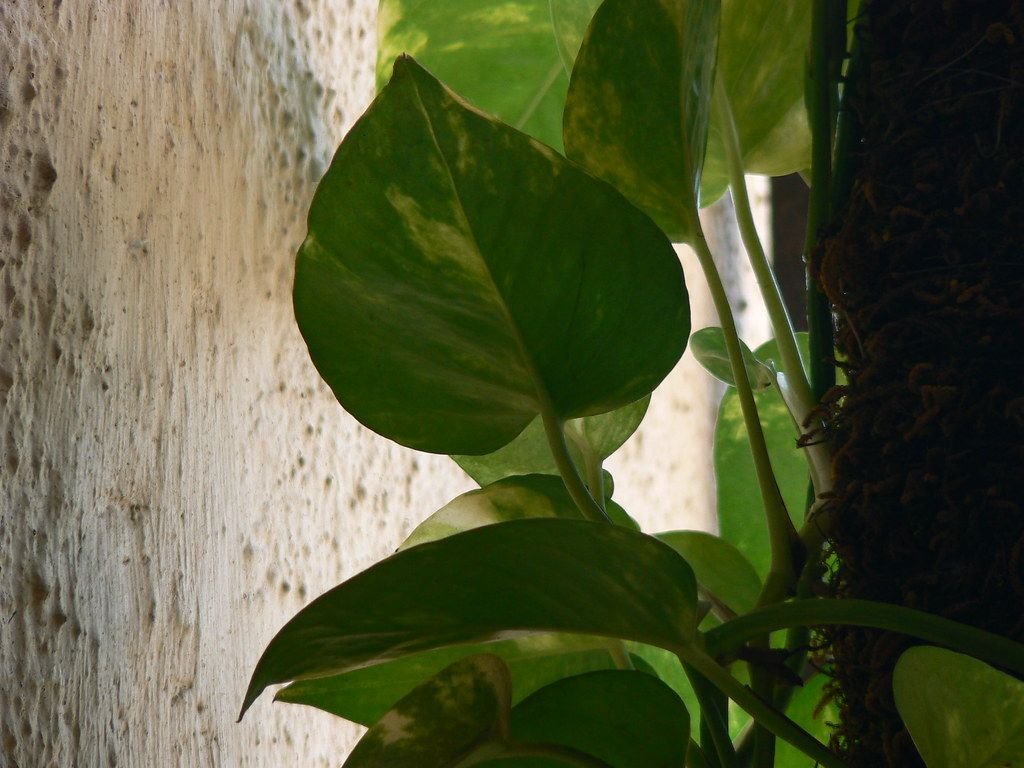
Pothos care
- Light: anything from a dim office to a bright room, but no harsh direct sun. Variegated types keep their color best in bright, indirect light.
- Water: when the top 1 to 2 inches of soil are dry, usually every 1 to 2 weeks. Drooping leaves mean it is thirsty; it perks up within hours.
- Soil and pot: any general potting mix in a pot with a drainage hole.
- Feeding: balanced houseplant fertilizer once a month in spring and summer.
- Fuller plant: pinch or cut long vines just above a leaf. New stems grow from the node below the cut, and the cuttings can go back into the same pot.
How to propagate pothos in water
- Cut a 4 to 6 inch piece of vine with at least 2 or 3 leaves, just below a node (the brown bump where a leaf meets the stem).
- Remove the lowest leaf and stand the cutting in a glass of water so the node is under water.
- Keep in bright, indirect light and change the water every week. Roots appear in 1 to 3 weeks.
- Pot it up once roots are 2 inches long, and keep the soil a little moist for the first few weeks.
Popular types of pothos
| Type | Look |
|---|---|
| Golden pothos | Green leaves with yellow streaks; the classic |
| Marble Queen | Heavy white and green marbling; needs more light |
| Neon | Bright chartreuse leaves |
| N'Joy and Pearls and Jade | Small leaves with crisp white edges |
| Jade | Plain dark green; the best for low light |
Pothos vs philodendron
They look alike, but pothos leaves are thicker, waxier and slightly lopsided, with a groove along the leaf stalk. Heartleaf philodendron leaves are thinner, more evenly heart-shaped and softer, and new leaves unfold from a papery sheath. Care is almost identical.
Common problems
| What you see | Likely cause and fix |
|---|---|
| Yellow leaves | Most often overwatering. Let the top 2 inches dry before watering again. |
| Brown, crispy edges | Too dry, or direct sun. |
| Long bare vines | Too little light. Trim and replant the cuttings to fill the pot. |
| Variegation fading | Not enough light. |
Is pothos toxic to cats and dogs?
Yes, mildly. The ASPCA lists pothos as toxic: calcium oxalate crystals in the leaves cause mouth pain, drooling, pawing at the mouth and vomiting. It is rarely serious. Hang it out of reach. If a pet eats a plant and seems unwell, call your vet or the ASPCA Animal Poison Control Center at (888) 426-4435.
More houseplant guides
Frequently asked questions
How often should I water pothos?
When the top 1 to 2 inches of soil are dry, usually every 1 to 2 weeks. Water less in winter.
Can pothos grow in low light?
Yes, it is one of the best low-light plants, though it grows slower and loses some variegation.
Why are my pothos leaves turning yellow?
Usually overwatering. Check that the pot drains and let the soil dry more between waterings.
Is pothos safe for cats?
No. It is mildly toxic to cats and dogs and causes mouth irritation and vomiting.